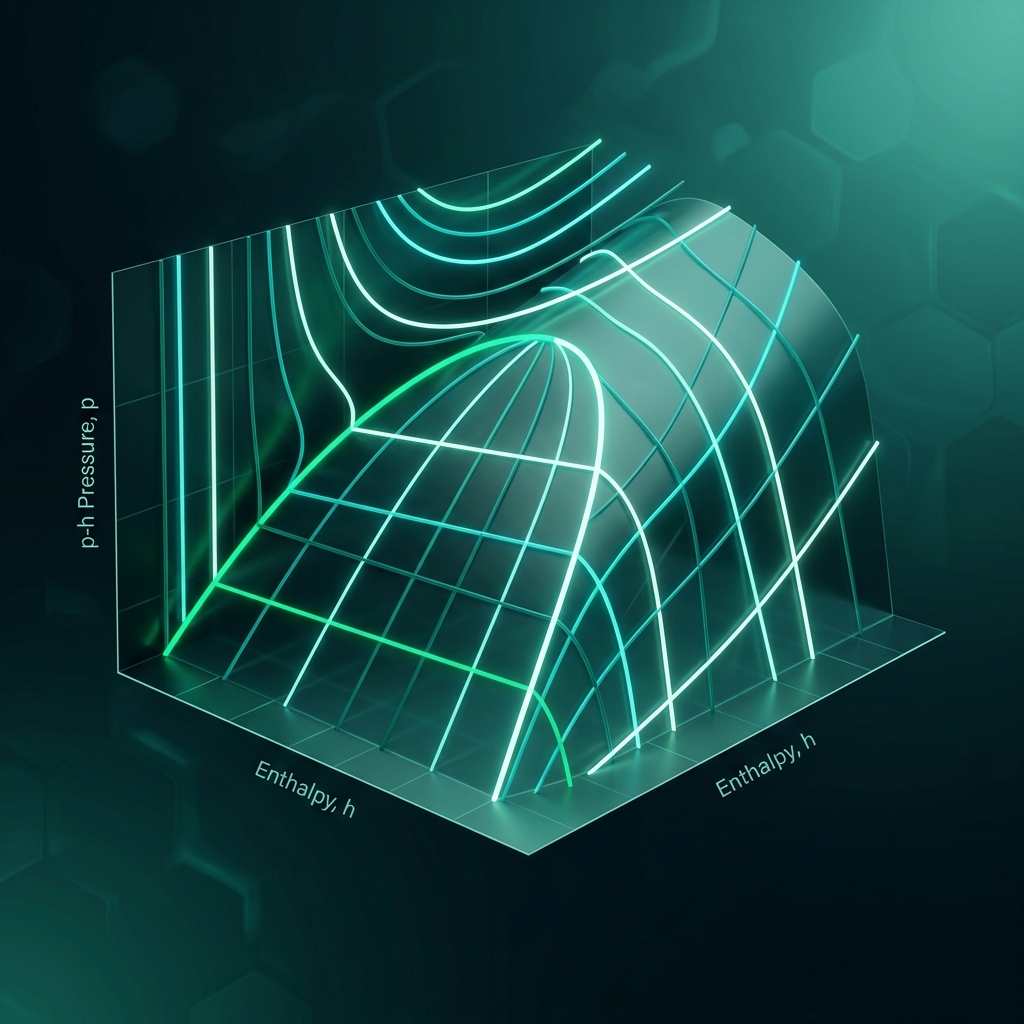
Drawing the Ideal Refrigeration Cycle on a Pressure-Enthalpy Chart
Step-by-step guide to plotting an ideal refrigeration cycle on a p-h diagram, finding H1, H2 and H3, and why it matters for the F-Gas exam.
Read more →Study tips, exam guides, and everything you need to know about F-Gas certification.
Step-by-step guide to plotting an ideal refrigeration cycle on a p-h diagram, finding H1, H2 and H3, and why it matters for the F-Gas exam.
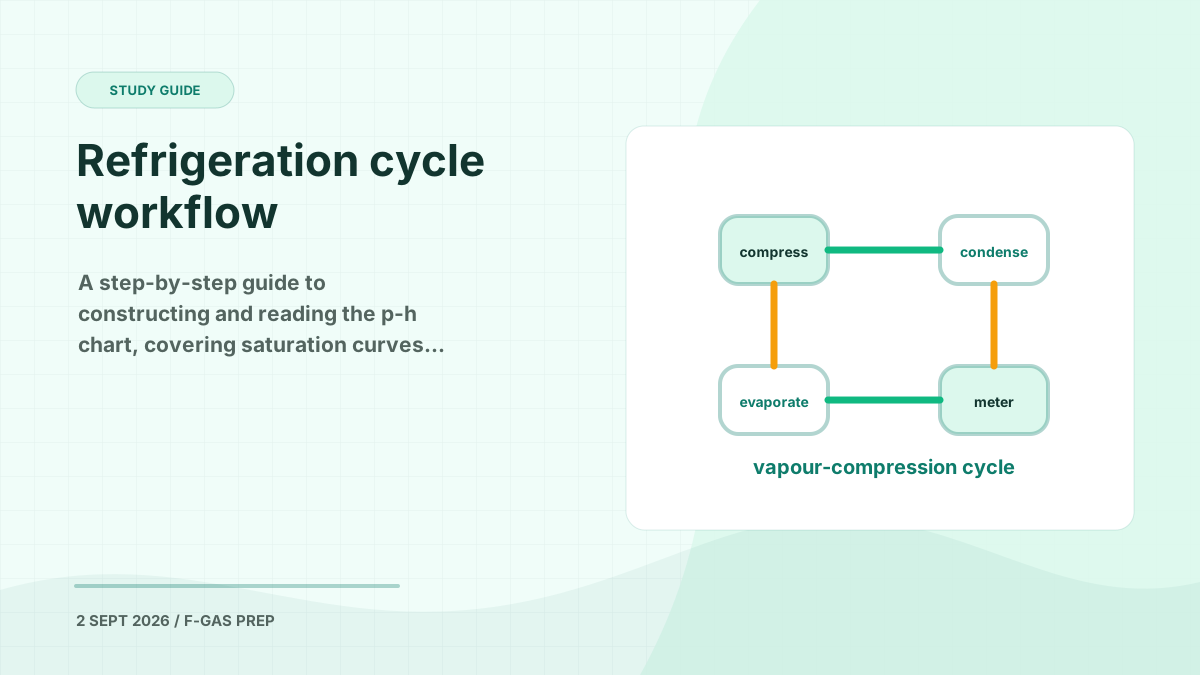
Read more →A step-by-step guide to constructing and reading the p-h chart, covering saturation curves, quality lines and superheat regions for City & Guilds 2079.
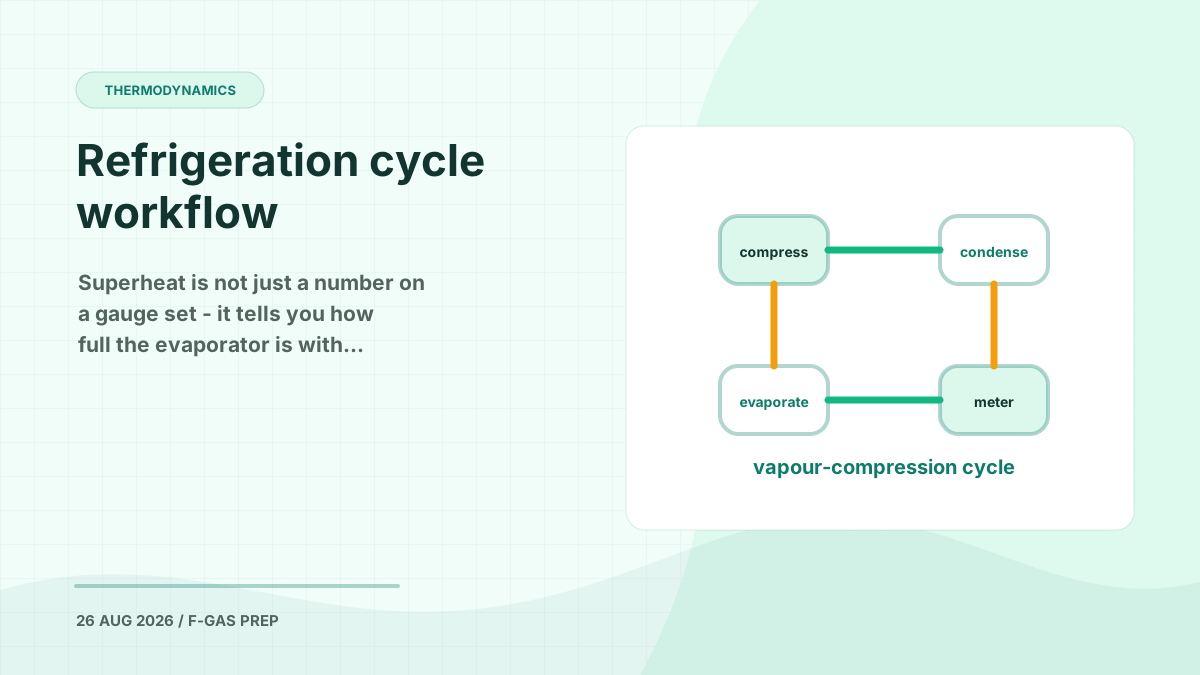
Read more →Superheat is not just a number on a gauge set — it tells you how full the evaporator is with boiling refrigerant. Here is what that means in practice.
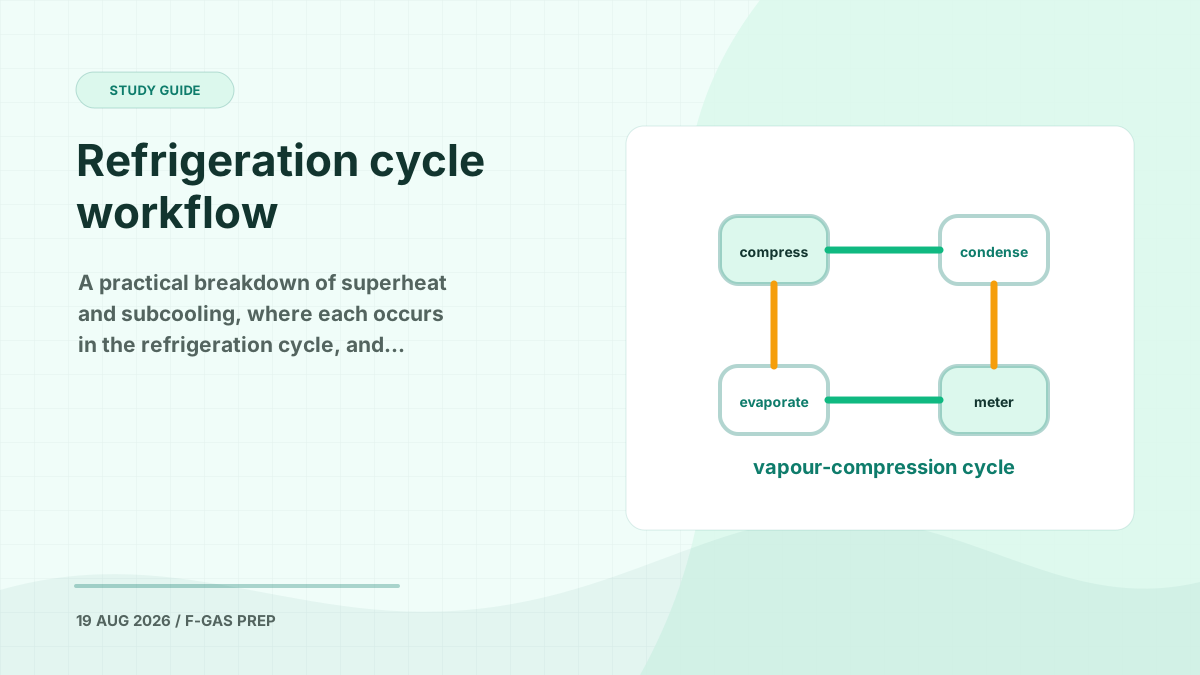
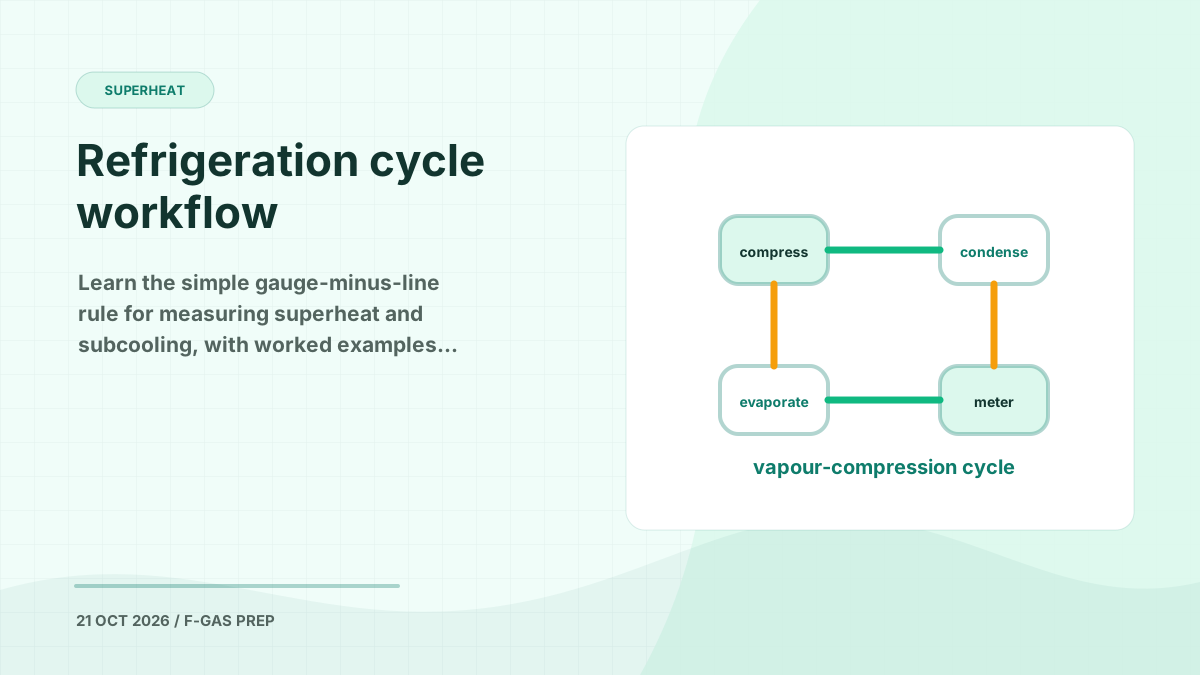
Read more →A practical breakdown of superheat and subcooling, where each occurs in the refrigeration cycle, and how to measure them for your F-Gas assessment.
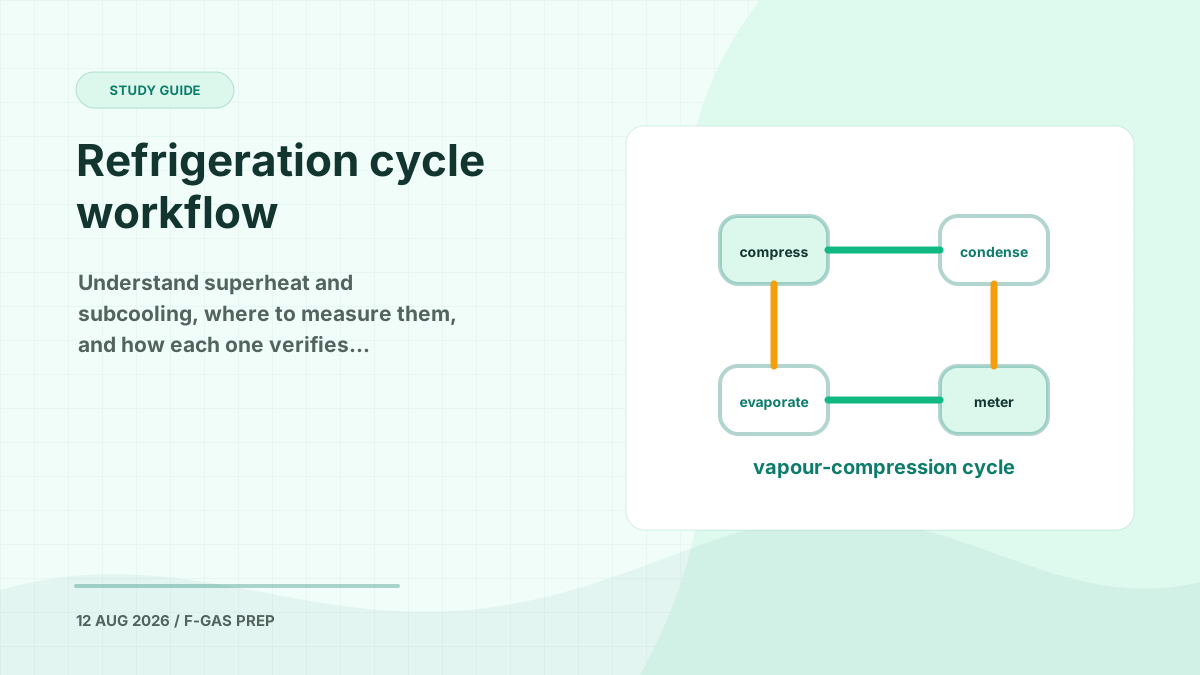
Read more →Understand superheat and subcooling, where to measure them, and how each one verifies refrigerant charge on TEV and fixed-orifice systems.
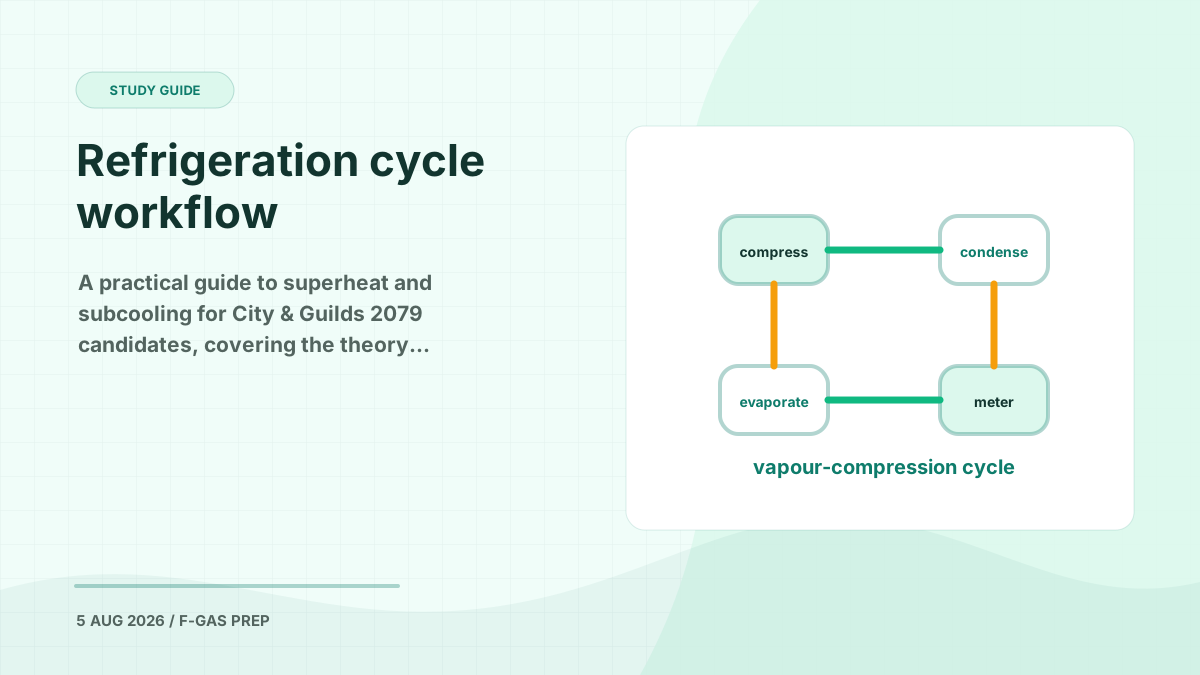
Read more →A practical guide to superheat and subcooling for City & Guilds 2079 candidates, covering the theory, the formulas and why both protect the system.
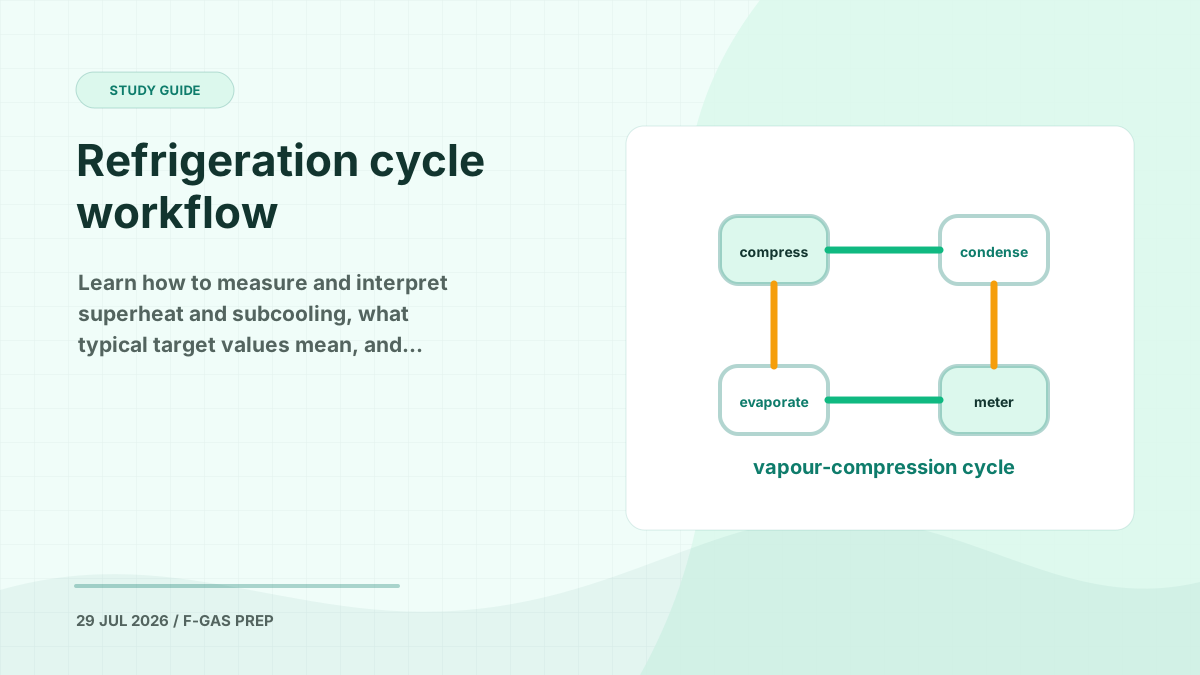
Read more →Learn how to measure and interpret superheat and subcooling, what typical target values mean, and how both readings help you diagnose refrigeration faults.
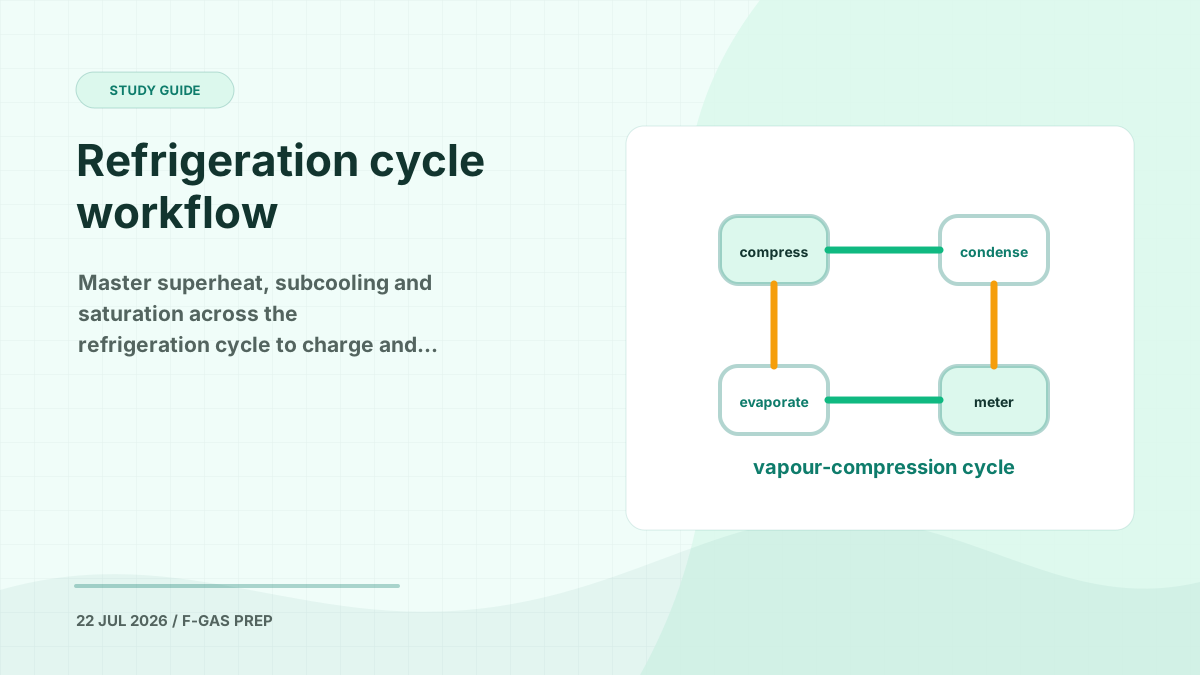
Read more →Master superheat, subcooling and saturation across the refrigeration cycle to charge and troubleshoot systems with confidence for your F-Gas assessment.
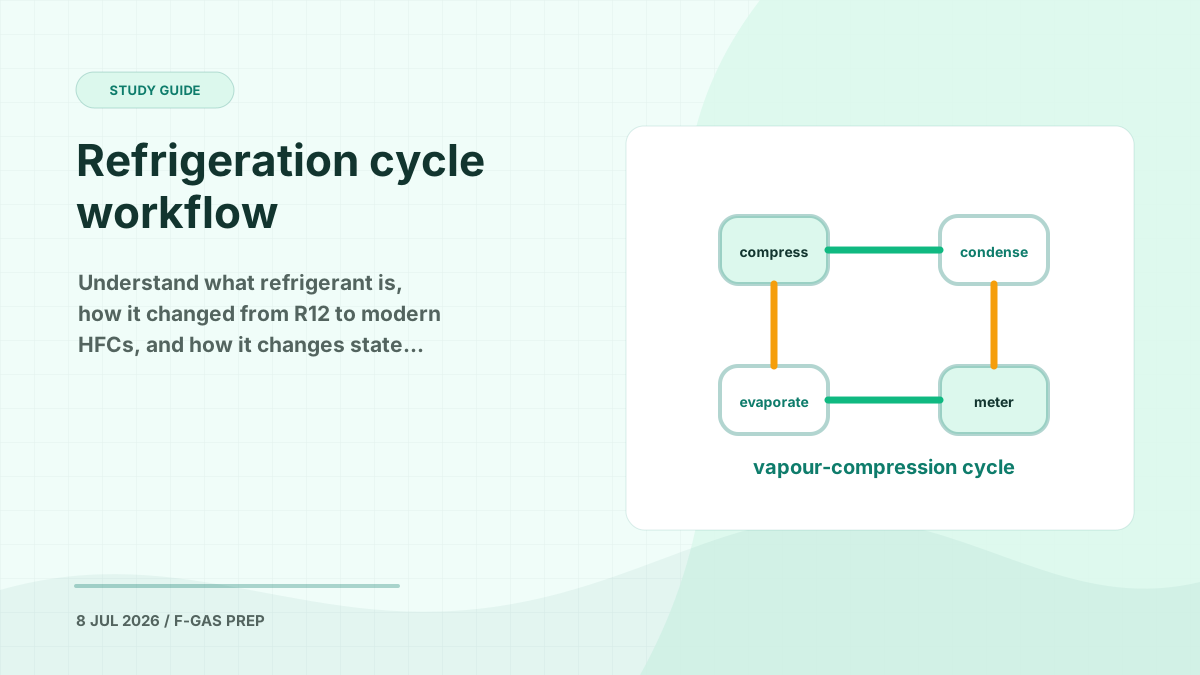
Read more →Refrigerant is the working fluid that transfers heat in fridges, air conditioners and heat pumps. See how it changes between liquid and vapour.
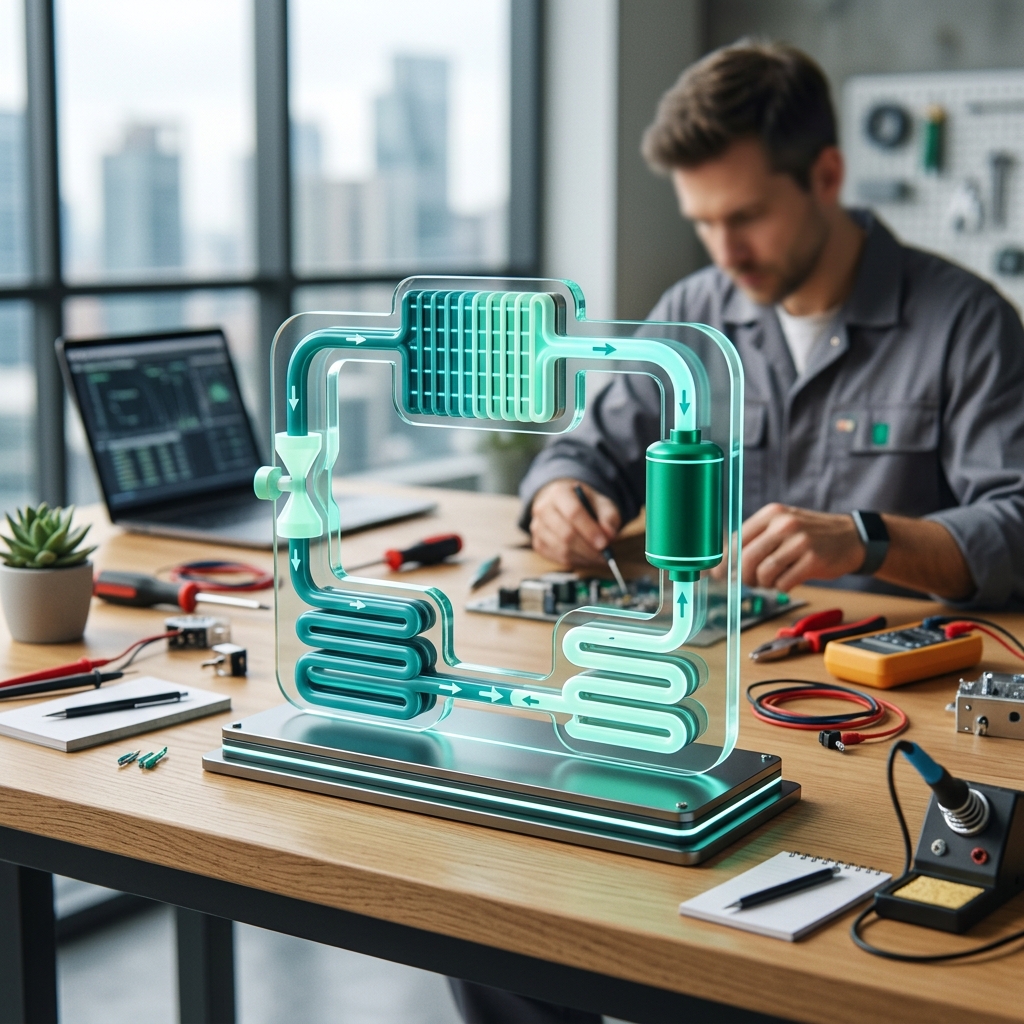
Read more →A plain-English walk through the four core components of the vapour-compression cycle: compressor, condenser, metering device and evaporator.
Read more →A back-to-basics walkthrough of pressure, temperature, heat and the gas laws behind the refrigeration cycle — and why they transform your diagnostic skills.
Read more →A walkthrough of the vapour-compression refrigeration cycle and the heat-transfer principles every F-Gas candidate needs for the City & Guilds 2079 exam.
Read more →
A technically accurate breakdown of the vapour-compression cycle — the four components, four processes, and COP/EER efficiency, for your F-Gas assessment.
Read more →
How the vapour-compression cycle moves heat through the compressor, condenser, metering device and evaporator, for the City & Guilds 2079 F-Gas assessment.
Read more →
A component-by-component walk through the vapour-compression refrigeration cycle, and why F-Gas technicians must understand it for the City & Guilds 2079 exam.
Read more →
Master the four core stages of the vapour-compression refrigeration cycle and learn how superheat, subcooling and saturation underpin safe F-Gas practice.
Read more →
A clear walkthrough of the basic vapour-compression refrigeration cycle, mapped to the knowledge you need for City & Guilds 2079 and day-to-day F-Gas work.
Read more →
A historical look at the EU F-Gas Regulation review, the IEC 60335-2-40 Edition 7 debates, and how that policy discussion fed into the 2024/573 framework.
Read more →
A historical guide to the original EU F-Gas phasedown under Regulation 517/2014 — how HFC quotas worked and what the 79% cut by 2030 meant under that regime.
Read more →
The original EU Regulation 517/2014 phase-down and leak-test changes explained — and why it still appears in legacy F-Gas training since 2024/573 replaced it.
Read more →
Effective F-Gas record-keeping is essential for compliance — how to manage systems, cylinders, and log entries to meet EU F-Gas Regulation requirements.
Read more →
A practical guide to the key pieces of equipment used in F-Gas refrigerant handling, from recovery machines and vacuum pumps to leak detectors and brazing sets.
Read more →
A complete guide to F-Gas training and certification — who needs it, what the qualification involves, and how to prepare for the City & Guilds 2079 assessment.
Read more →
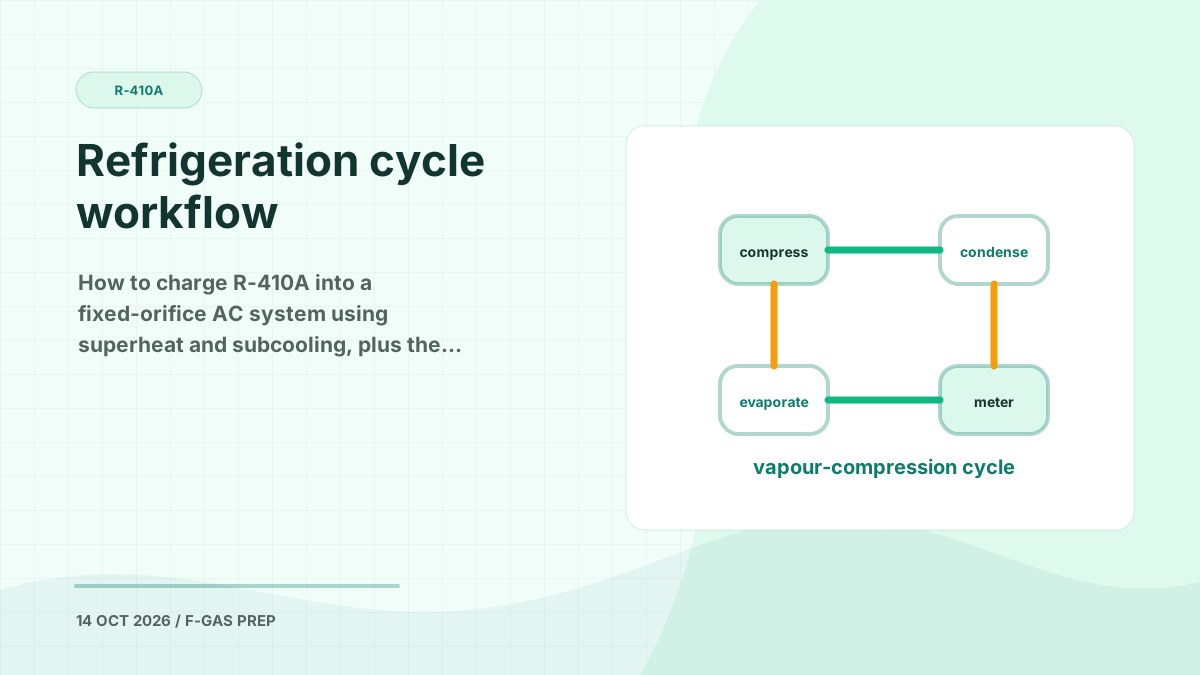
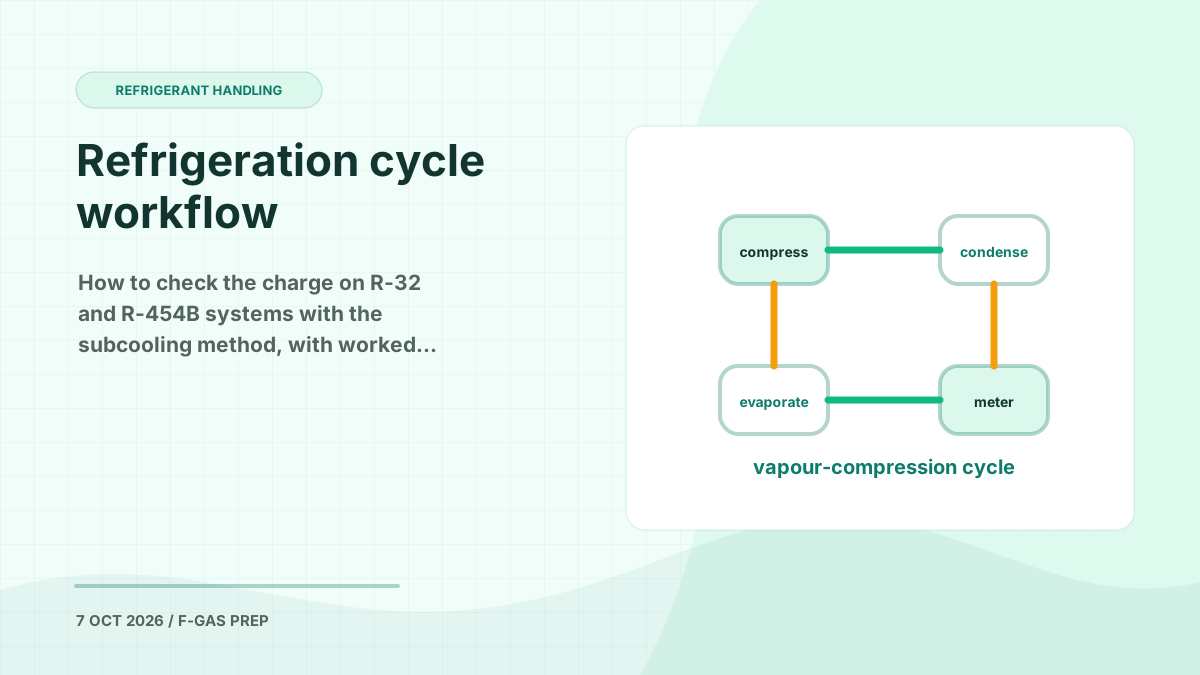
A step-by-step look at an F-Gas practical training course — from fitting gauges and recovering refrigerant to pressure testing and system charging.
Read more →
Discover the most commonly tested topics in the F-Gas certification exam and focus your study time on what matters most.
Read more →

Compare UK F-Gas Categories 1, 2, 3 and 4: permitted work, charge limits and who each certificate suits, based on current GOV.UK guidance.
Read more →
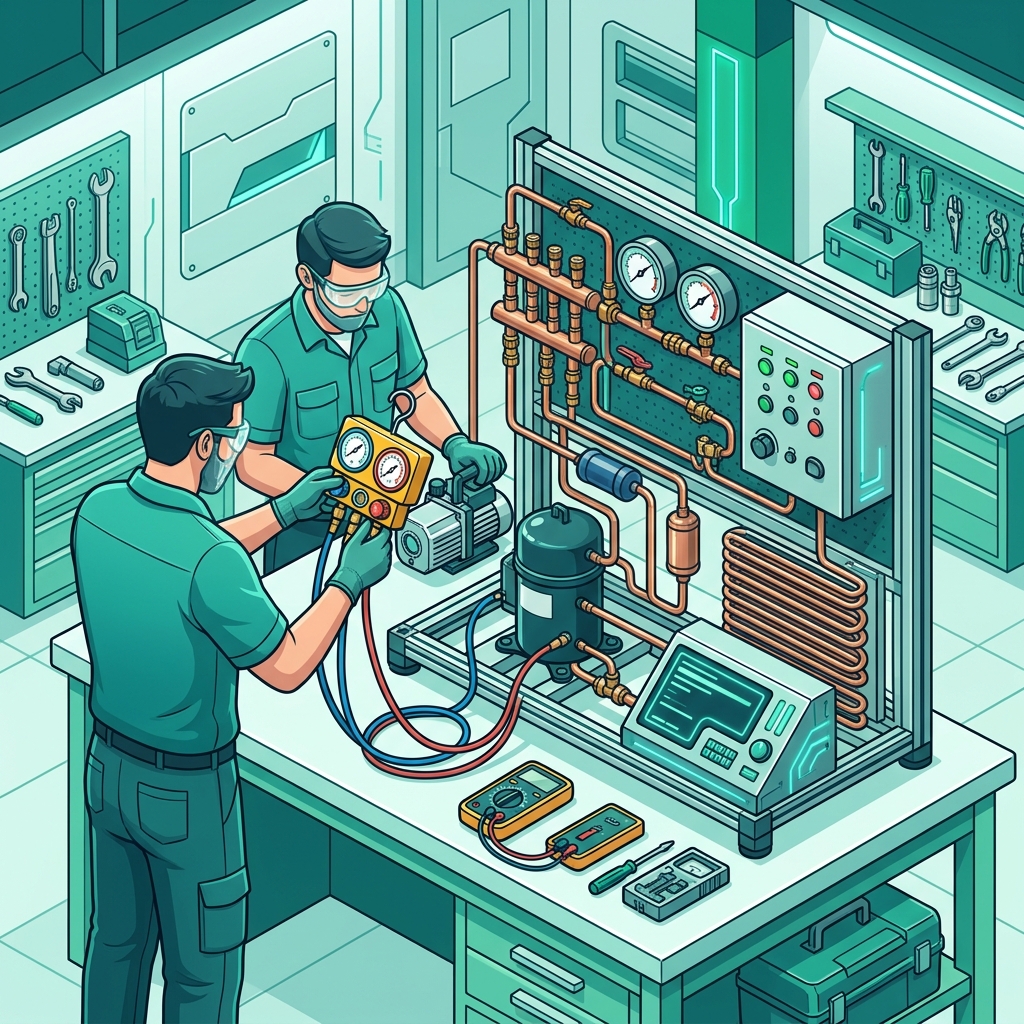
A June 2026 overview of EU Regulation 2024/573 — when it took effect, leak-check and record rules, product bans, and how it differs from the GB retained regime.
Read more →
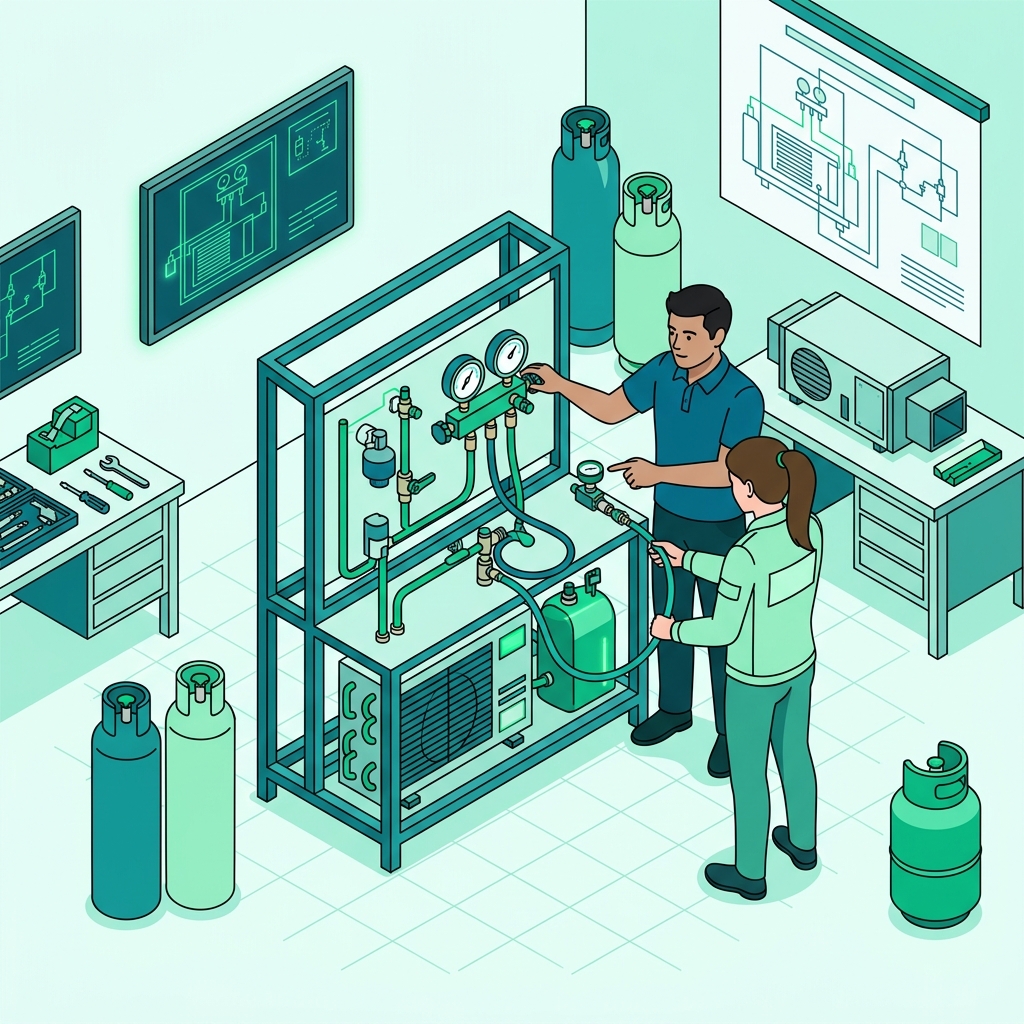
Everything you need to know about passing the F-Gas certification exam, including study tips, exam format, and preparation strategies for HVAC technicians.
Read more →